
AZANSYS DRONE TECHNOLOGY
Intelligent Fire Fighter
Drone Solutions
Drones that dare where humans can't
Protect lives and critical infrastructure with AI-powered fire fighter drones designed for rapid emergency response, real-time thermal imaging, aerial surveillance and precision firefighting in hazardous environments.
30 MinFlight Time
500 mControl Range
30 kgPayload Capacity
ThermalImaging Payload
FIREFIGHTER DRONE - Coming Soon
Drones that darewhere humans can't
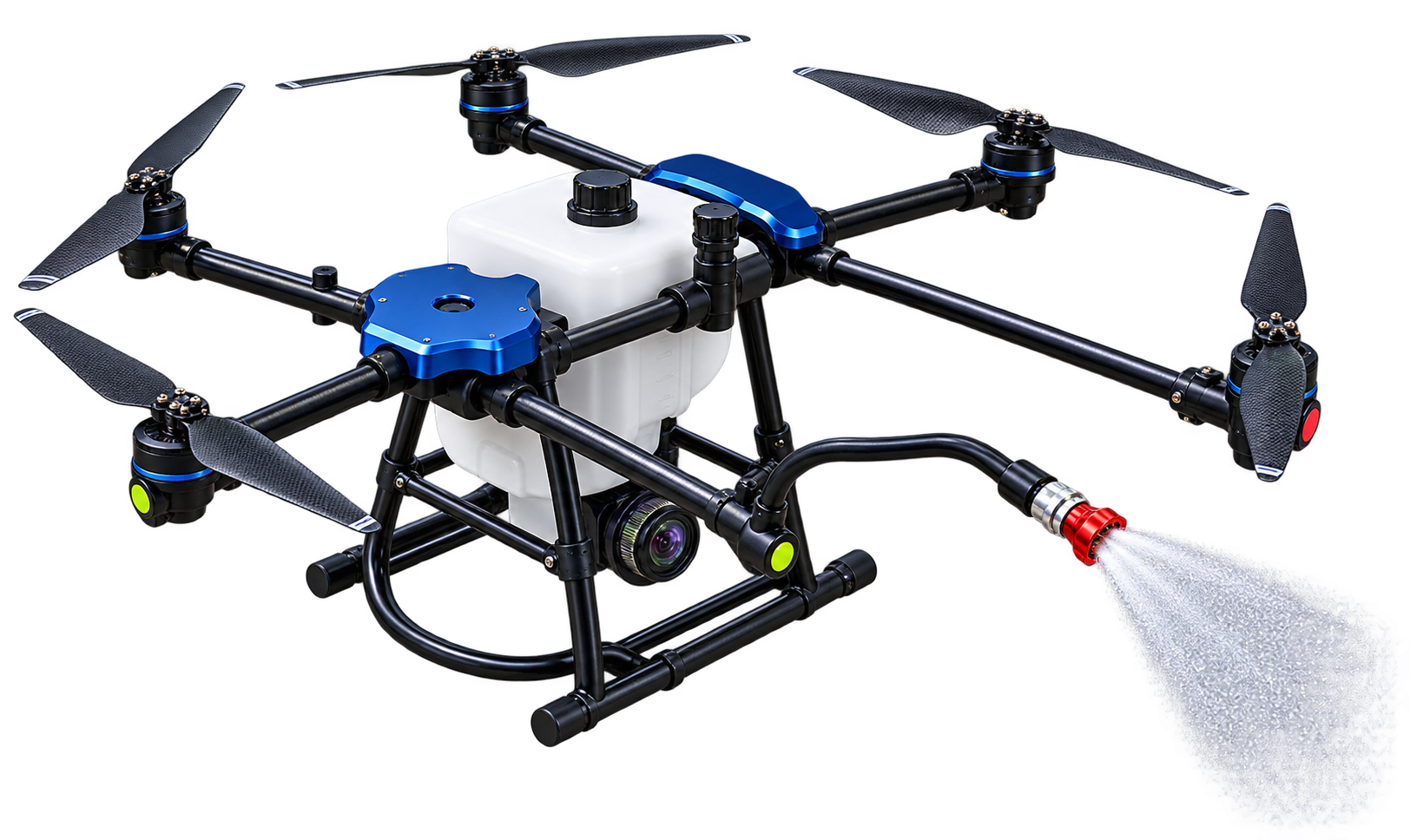
Introducing our next-generation firefighting UAV — a powerful aerial ally in the battle against fire.
Engineered for extreme environments and inaccessible zones, this drone is being developed to assist emergency responders by delivering payloads of water or fire-suppressant foam precisely where they are needed most.
From wildland fires to industrial accidents, our Firefighter Drone is poised to redefine the future of emergency response with unmatched agility, endurance and safety.
- Water / foam discharge payload up to 30 kg
- Up to 30 minutes of continuous flight
- Thermal mapping and live situational feeds
SMARTER RESPONSE. SAFER OPERATIONS.
Respond faster whilereducing operational risk
Traditional firefighting has limitations — dangerous access points, slow response times and high human risk. Our Firefighter Drone is designed to operate in the most hazardous conditions.
View SpecificationsADVANCED CAPABILITIES IN DEVELOPMENT
Engineering saferemergency response
Our upcoming firefighting drone technologies are being engineered to improve safety, efficiency and real-time emergency response.
ADVANCED FEATURES
Next-generation technologyfor critical operations
Built with next-generation technologies to deliver reliability, safety and performance during critical firefighting operations.
SPECIFICATIONS
Engineered for emergencies and extreme environments.
Engineered for emergency response, heavy payload delivery and operation in extreme environments.
Firefighter Drone
- Battery options
- 28,000 mAh / 30,000 mAh Li-Po (Quick-Swap)
- Flight time
- Up to 30 minutes
- Range
- 500 m (expandable with repeaters)
- Camera
- Full HD live feed for navigation & assessment
- Navigation system
- Precision GPS + Smart Auto Modes
- Flight controller
- NDAA-Compliant with AI-Assisted Pathing
- Data streaming
- Real-Time, Low Latency Telemetry
- Payload capacity
- Up to 30 kg (Water/Foam Discharge System)
IN THE FIELD
Aerial support for emergency teams.
Firefighting and rescue scenarios where aerial intelligence makes the difference.
BUILDING THE FUTURE OF FIRE RESPONSE
Safer response,for every incident.
Partner with AZANSYS to bring intelligent firefighting drones into your emergency operations.